[This page is underconstruction]
“Pareidolic Narrative” is a mixed-media installation originally developed for Nakanojo Biennale 2025. The project brings together kinetic photographic works with real-time AI-generated moving images and sound, reflecting on how the subtle rhythms of everyday life and accumulated traces of place can gently awaken memory and imagination.
The term “Pareidolic” derives from “Pareidolia”, a psychological phenomenon in which vague or ambiguous visual stimuli are perceived as meaningful forms. This concept plays a central role in the project and is closely connected to the AI denoising process, through which noise patterns are gradually interpreted and transformed into recognizable images. In this sense, “Pareidolia” functions as both a conceptual and methodological framework for the work.
The project began with a period of walking and observing throughout Nakanojo. During this stage, I photographed what I refer to as the “Surface of Nakanojo”, textures of roads, facades of abandoned houses, and everyday objects along the streets, surfaces that have long absorbed the experiences and memories of those who live, and once lived, there.
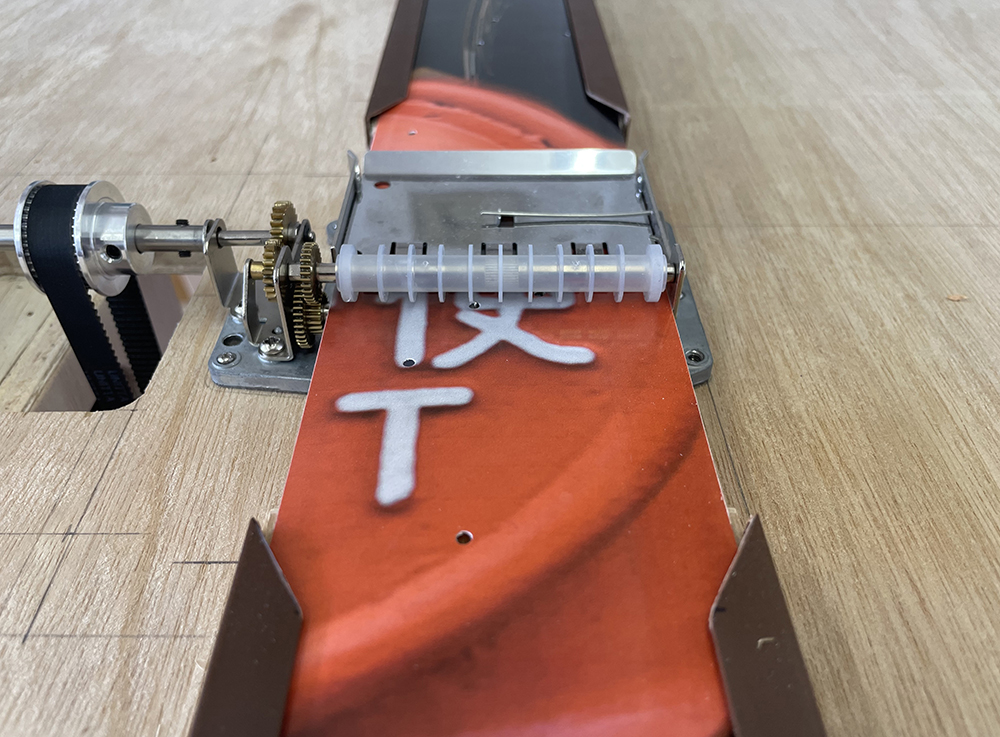
These images were then digitally processed into blurred and ambiguous forms, horizontally stitched and printed as three photographic strips, each measuring 8.5 meters in length, approximately. I refer to these as “AV Strips,” as they function as both sonic (Audio = A) and visual (Visual or Video = V) sources, within the installation. The prints were rolled into a custom-made device, forming a continuous photographic scroll.
The scroll was subsequently brought to various locations in Nakanojo and shared with local participants who kindly took part in the project. Responding to each ambiguous image as visual stimuli, participants were invited to draw whatever forms they perceived, accompanied by a short written description of their interpretation.
In the next stage, patterns of holes were carefully punched into each drawing, with their placement determined by the drawn lines and shapes. This process inverts the familiar act of imagining figures by connecting stars in the night sky. In this project, the drawing itself defines where the “stars” or “holes” should appear.
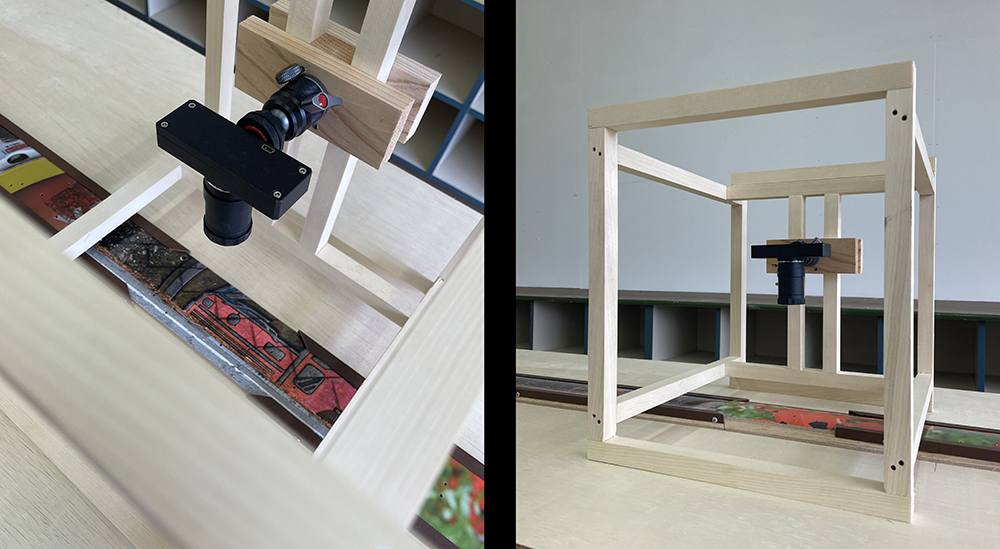
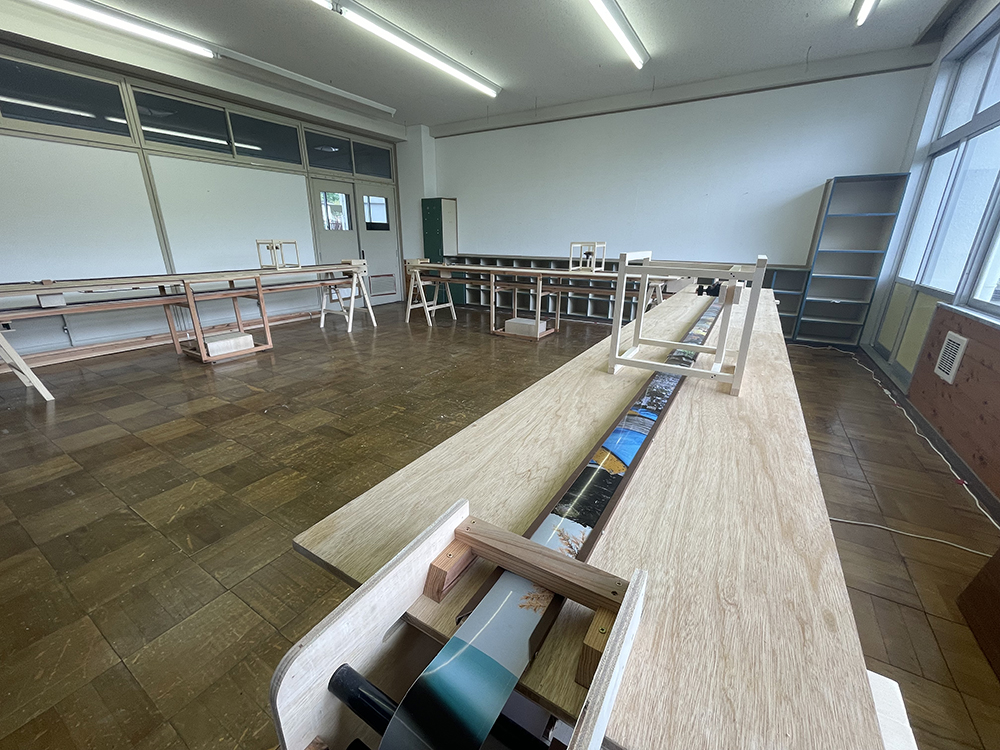
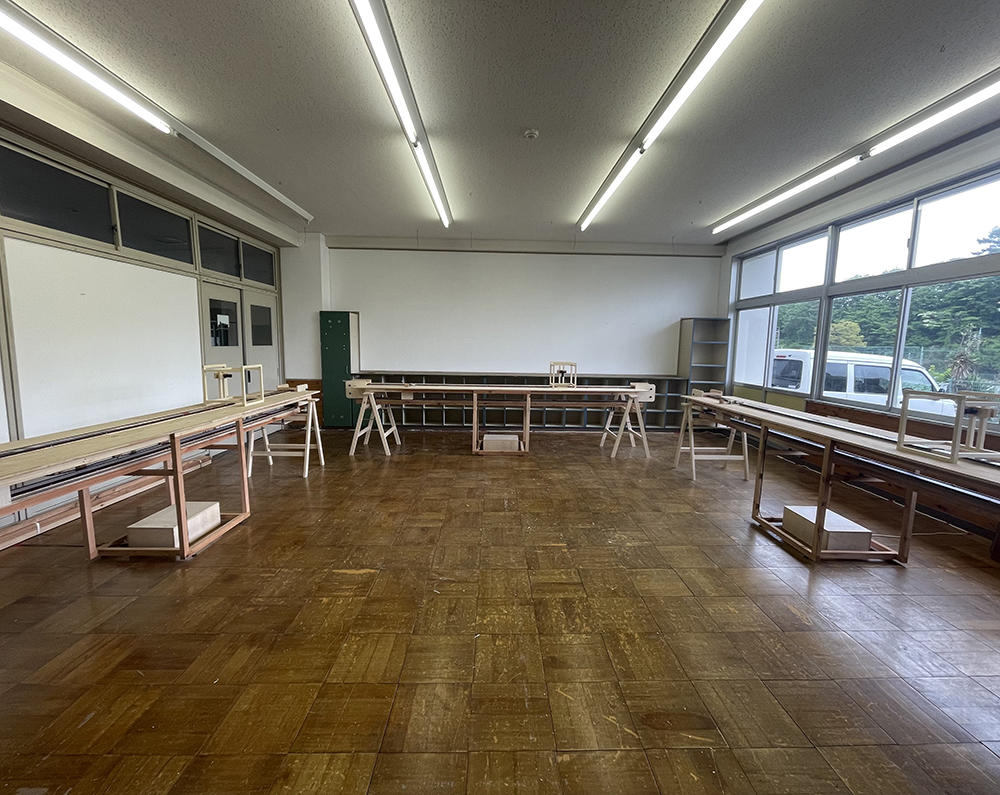
Within the exhibition space, each completed strip was installed into a table-like structure incorporating a music box and a web camera. Once looped through the music box mechanism, the punched holes generated distinct melodies. At the same time, the moving strips were captured by the cameras and transmitted to a computer, where three video streams were combined and interpreted by an AI system in real time, producing continuously evolving moving images.
This project would not have been possible without the generous support of the people of Nakanojo, fellow artists and the biennale team.
I am especially grateful to Suzuka Kishimoto, whose support was invaluable throughout the development and realization of the work.